When we relate, we discover: how coching relationships shape self-discovery
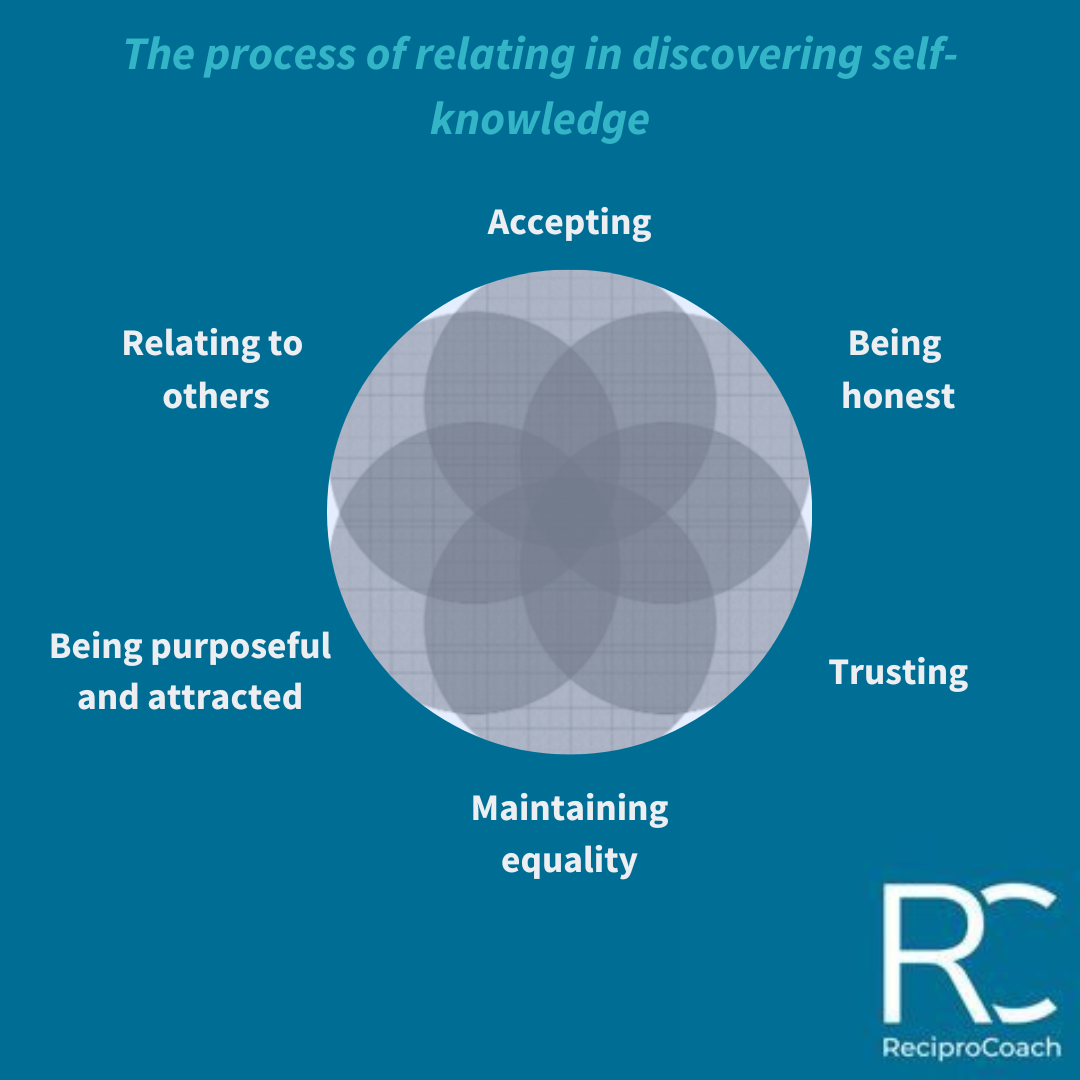
The way coaches and clients relate to each other is a vital part of the coaching process. This relationship creates a space where clients can explore and discover deeper self-knowledge. When coaches are accepting, clients feel safe to be honest and trusting, which allows them to open up and reflect more deeply.
A key feature of the coaching relationship is maintaining equality — coaches don’t give answers but support clients in discovering their own. At the same time, there’s usually a sense of being purposeful and attracted to the coaching process and the relationship itself, which helps keep the work focused and engaging.
Finally, the process of relating to others — especially in a safe, respectful, and professional coaching space — becomes the foundation for the client’s growth. These six qualities work together to support meaningful and constructive interactions that lead to greater self-awareness and insight.
The figure below illustrates how these elements come together in the coaching relationship.
Reference:
Griffiths, K. (2008). Discovering, applying and integrating self-knowledge: A grounded theory study of learning in life coaching (Ph.D). Centre for Learning Innovation, Queensland University of Technology.
Not yet a member?

Already a member?