Is it enough for a coach to be a sounding board?
Many coaching clients appreciate the role of the coach as a sounding board.
The Collins dictionary defines a sounding board as a person, group, experiment, etc, used to testa new idea, policy, etc, for acceptance or applicability.
While this may be true, few people understand just how deep this sounding board process can go.
Some people are external processors and need to actually say things in order to gain insight. Clients like this appreciate the role of the coach as a sounding board, and, with the trust within the coaching relationship, they feel safe to run ideas past their coach.
Coaching can be particularly effective for clients who prefer a verbal mode of reflection, as coaches provide a sounding board, giving these clients the opportunity to really process their own thoughts. Driven by questioning, clients get the opportunity to think aloud and articulate their thoughts. This is characteristic of reflective dialogue, as talking assists clients in engaging in the reflective process.
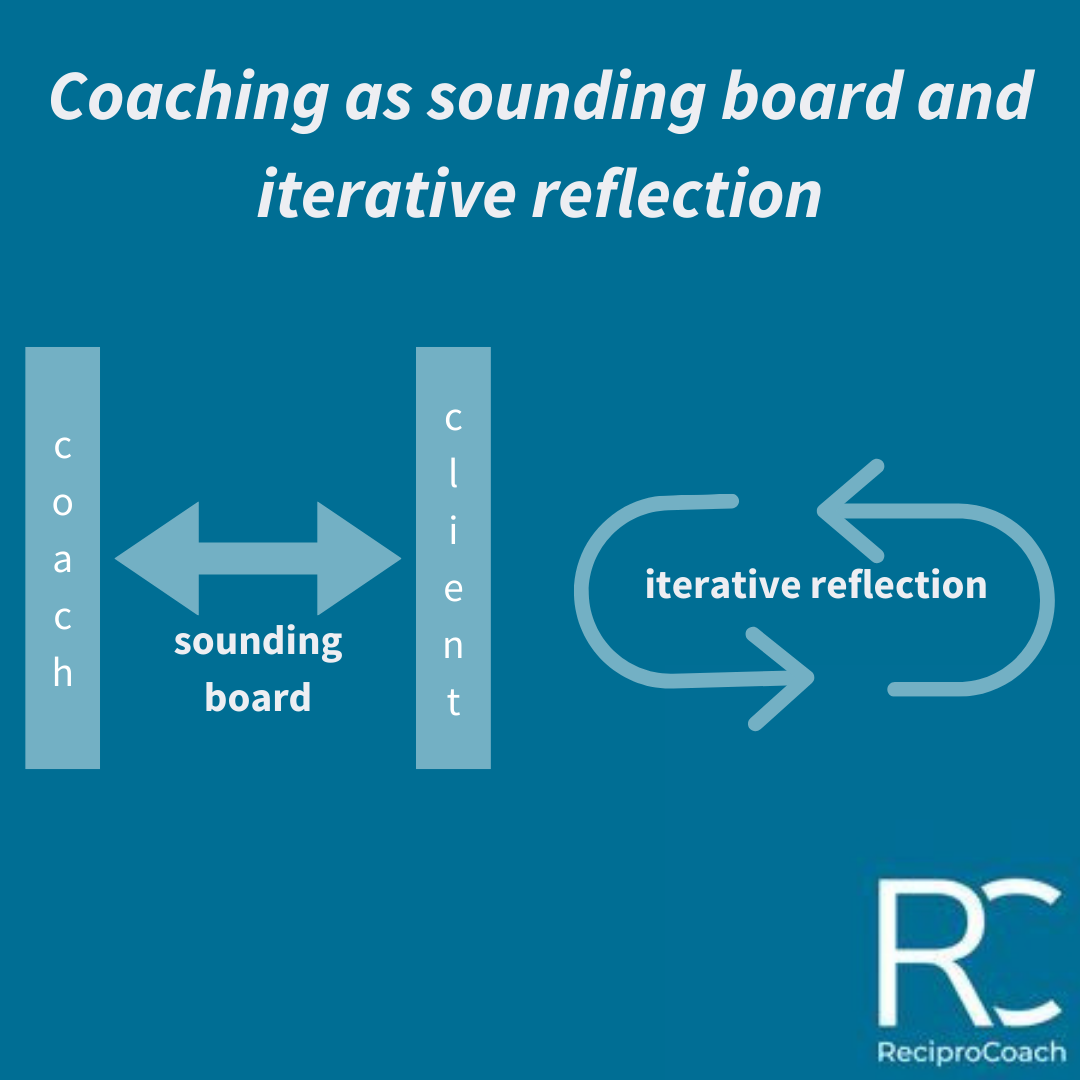
However, coaching also goes beyond a sounding board to reach a deeper level of reflective conversation in which clients recognise their own thoughts, as they emerge in their consciousness. In the process of answering coaches’ questions, clients actually become aware of their own thoughts and hear themselves, as they come to realisations and discover their own answers.
Furthermore, if clients fail to hear themselves, coaches can reflect the clients’ reflections back to the clients, thereby encouraging deeper reflection and an iterative cycle of reflection on reflection. As clients reflect, and then reflect on their reflections, clients discover deeper learning and insight.
Reference:
Griffiths, K. (2008). Discovering, applying and integrating self-knowledge: A grounded theory study of learning in life coaching (Ph.D). Centre for Learning Innovation, Queensland University of Technology
Not yet a member?

Already a member?