Improvise or stick to a coaching model?
This article is a reprint of a Coaching Research in Practice (April, 2013).
Many coaches are trained to coach according to a particular model. Over time, some coaches move away from their original model, while others stick to their first model or add others. Also, quite a number of coaches draw on different models in different situations.
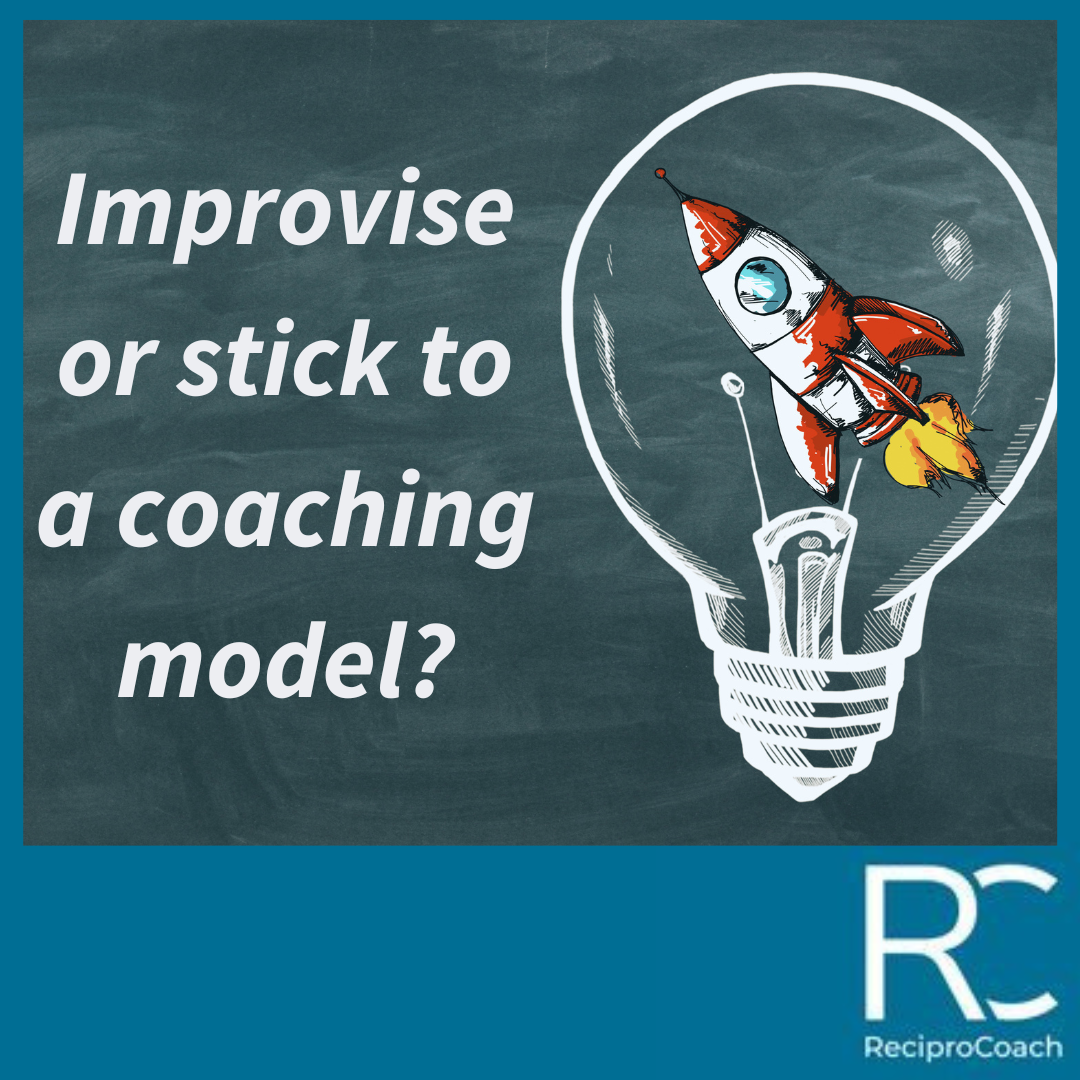
Much research has been devoted to the efficacy of one model over another, so I was excited to read Michael J. B. Read’s recent paper on “The Importance of Improvisation in Coaching” (Coaching: An International Journal of Theory, Research and Practice, Volume 6, Issue 1, 2013, pp. 48-53).
COACHING RESEARCH:
According to Read’s paper, improvisation, otherwise known as “spontaneous creativity and innovation” (p. 47), is considered to be either essential or very important by more than 73% of organizational coaches. Furthermore, 64.7% of coaches reported improvising during coaching often or always, with less than 6% of coaches reporting that they improvised rarely. These findings were mirrored in a second study of the same nature with a different participant sample.
A key point revealed in this study was that “coaches felt they must spontaneously adjust to needs of the coachee during coaching sessions to help them reach their goals” (p. 50) and referred to it as going with the flow, working in the moment, following my instinct and respond[ing] to the needs in the session. According to Read, improvisation takes the form of “brainstorming, questioning, role-modeling, storytelling, tool usage and feedback delivery” and was also used “when creating action plans, planning future sessions, assigning homework or to change the physical context of coaching” (p. 50).
IN PRACTICE:
This was a surprisingly short paper, but the message was clear: Improvisation is a key component of coaching. It reminds us of the importance of using any of the plethora of coaching models as a platform rather than a prison.
Furthermore, as Read discussed the limitations of his study, he noted that improvisation may not be fostered in environments in which unpredictability is undesirable. He also highlighted that fostering “a climate of risk-taking where new ideas and solutions are welcomed” (p. 53) will enhance improvisation.
Thus, when considering your own practice of improvisation within your coaching sessions, if you would like to improvise more, you may wish to explore your relationship with predictability and risk-taking. How safe do you feel when you veer away from your model? It’s not always just how safe the client feels that will impact a coaching session!
You might like to address how you feel about taking the risk to improvise in coaching with your coach, mentor or supervision group.
Translating coaching research into coaching practice,
Kerryn Griffiths (PhD – The Process of Learning in Coaching)
Global ReciproCoach Coordinator
Not yet a member?

Already a member?